
"I'm definitely seeing the team making better decisions. I'm seeing [the financials] coming through in terms of people's commitment to being able to hit objectives and understand what we're trying to do.”

When Gavin Exon stepped into his role as President of the Canadian division of Exchanger Industries, he inherited a leadership team marked by long tenure, siloed thinking, and low trust. Some team members had been with the company for over three decades, while others were new and struggling to find footing. There was no shared definition of leadership, psychological safety was low, and internal efforts to fix the dysfunction had failed. The culture was stagnant, and high-potential leaders were losing patience.
"We weren’t high-performing," Gavin recalled. "We were dysfunctional, and we weren’t even hitting the basics."
Exchanger partnered with Unicorn Labs to roll out a structured leadership development program across three cohorts, involving 20 leaders from different levels. Over six months, the Unicorn Labs team delivered a mix of DISC assessments, live group training, executive coaching, and strategic offsites. Fahd's facilitation created space for honest conversations, surfaced blind spots, and introduced shared language and tools for collaboration. This wasn’t just training, it was a full culture reset.
From structured modules to custom facilitation, Unicorn Labs gave Exchanger's leaders the space, tools, and trust to grow together.
The outcomes were immediate and lasting. Teams began leading their own cross-functional check-ins. Leaders made difficult decisions with more clarity and confidence, and company-wide metrics showed measurable progress in culture and communication.
Six months after completing the Unicorn Labs program, Gavin's middle management team continues to meet weekly on their own initiative, building on the 93% program completion rate that shows their genuine commitment from day one.
The program's psychological safety training manifested in high-stakes moments, with team members now delivering challenging but necessary feedback directly to leadership, transforming decision-making quality throughout the organization.
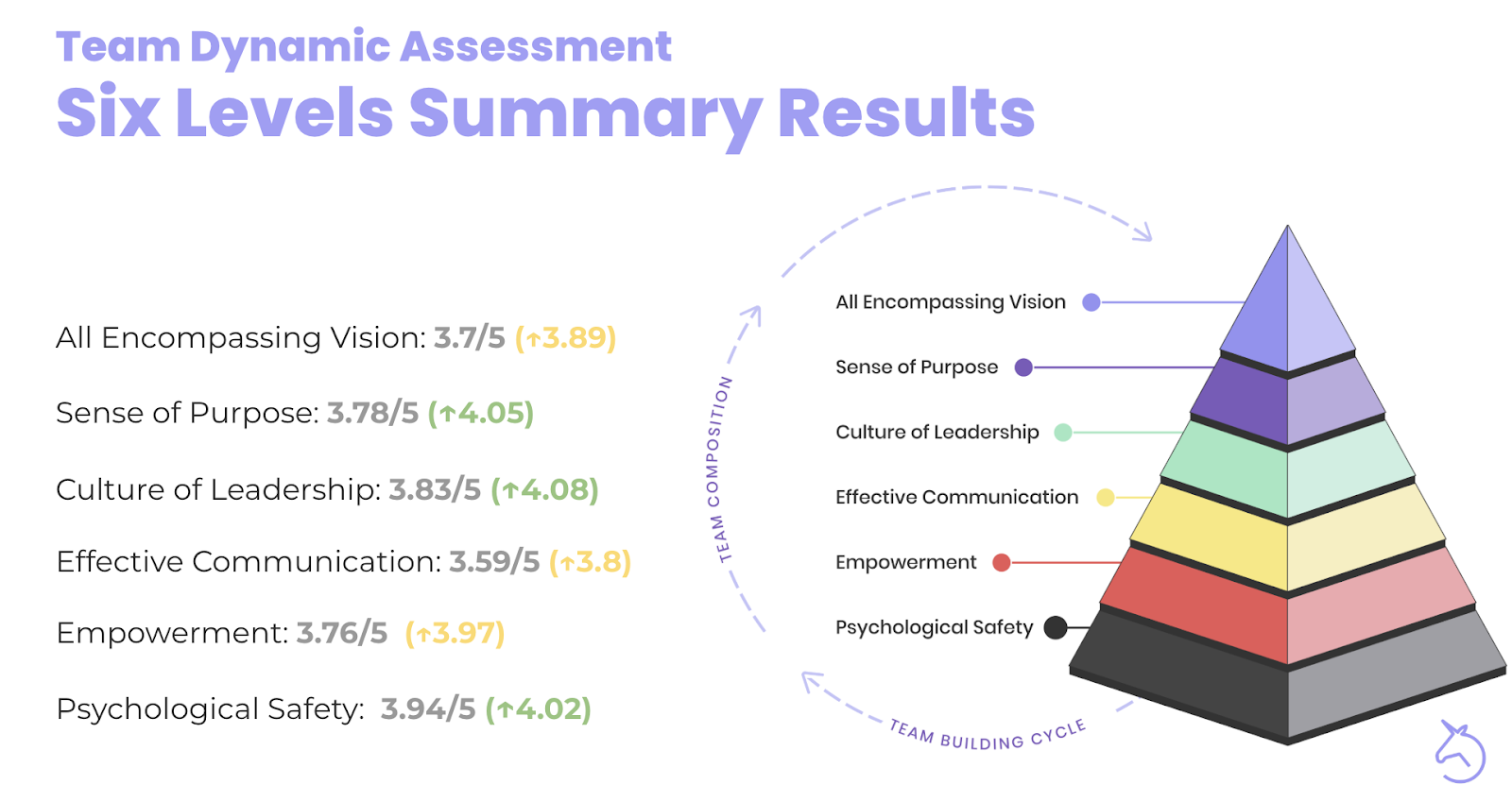
Gavin can now step back and trust his team to collaborate and deliver, knowing the foundation is rock solid, evidenced by measurable improvements across all six leadership areas, including a 7.14% increase in Sense of Purpose and 6.53% boost in Culture of Leadership.
When Gavin Exon stepped into his role as President of Exchanger Industries, a 64-year-old heat exchanger manufacturing company with 500+ employees and 9-figures in revenue, he inherited more than just a business he inherited a leadership challenge that threatened the company's future growth and sustainability.
Despite having incredible tenure within the organization, the leadership team was fragmented, dysfunctional with a fractured structure, spanning new hires and 30+ year veterans. Even with some impressive technical excellence, team dynamics were holding the company back.
Beneath the surface of this established company lay significant leadership challenges that would soon demand immediate attention and strategic intervention.
When asked to describe the chemistry between leadership teams prior to engaging with Unicorn Labs, Gavin's response was immediate and telling: "Disparate, fragmented."
He elaborated on the root of these challenges, explaining how the company's incredible tenure, while valuable, had created limitations.
"We have something that’s incredible: many of our people have been here for decades, some nearly half a century. But the flip side is that such long tenure can sometimes limit exposure to different perspectives and alternative ways of approaching business and leadership.”
Gavin's business acumen helped him identify the specific nature of their dysfunction:
“What resonated with me was that the team was dysfunctional. I’ve studied a lot of business frameworks, and Patrick Lencioni’s Five Dysfunctions of a Team really stood out. I could point to examples of each dysfunction playing out within our team.”
The situation was so concerning that Gavin had already attempted intervention: "I even went to the point of assigning a couple of our managers to read five dysfunctions of a team trying to get them to see it."
This dysfunction wasn't limited to just his direct team; it cascaded throughout the organization, creating a leadership crisis that demanded immediate and comprehensive attention.
For Gavin, the dysfunction wasn't just a performance issue, it was an existential threat to the company. "Ultimately in business, it all boils down to the results. I just knew that we weren't going to be able to achieve the growth results that we were looking for without change, and I was actually concerned that we weren't even able to achieve basic results to sustain the company."
Perhaps more concerning was the impact on their best people: "The other part of that risk is I was noticing that the right people… the ones you want on the proverbial bus… were getting frustrated, seeing them in despair, not able to make things move the way they needed to. You risk losing those key people and then that sets you back even further."
This talent retention risk created urgency around finding a solution that could not only address the immediate dysfunction but also re-engage and retain their most valuable team members.
Gavin brought significant experience with leadership development programs to his search for the right solution. "I used to work for General Motors for a period of time, and their training regimen was exceptionally strong in terms of their leadership program. So I've been through a fair bit of that.”
However, those previous experiences highlighted a key difference:
"Now, in that particular company, I was already part of a high-functioning team, so we had super high engagement, high performance, high focus on results, whereas that fundamental alignment just didn't exist at Exchanger."
The path to Unicorn Labs came through a trusted referral of Gavin’s:
"I was introduced to Unicorn Labs through another one of their clients and [I am] good friends with the CEO there. I was asking him for some advice on leadership training and what they've done, and so he introduced me to Unicorn Labs."
This referral approach proved crucial in establishing initial credibility and openness to the process.
Gavin's first interactions with the Unicorn Labs team, particularly Abigail (Account Executive), set a professional tone: "When I started meeting with Abigail, it was absolute professionalism, with a great work package that they'd put together…it seemed like a comprehensive overview."
What particularly impressed Gavin was the academic rigor behind the program:
"I immediately recognized elements from Patrick Lencioni and Jim Collins’ work embedded in the program. What struck me was, ‘wow, here’s somebody who’s taken a decade of reading that I’ve also done and distilled it into a practical, accessible package. It resonated even with leaders who haven’t had formal business training.’"."
This recognition of solid academic foundations within an accessible framework became a key differentiator in his decision-making process.
Beyond branding, Gavin had practical concerns about the investment:
"...there’s always a financial component when you’re bringing 20 people into a program. Beyond the investment in Unicorn Labs’ services, I had to weigh the opportunity cost of taking leaders away from their day-to-day work. But in the end, the return, both in team development and business impact, far outweighed those concerns."
The strategic concerns were equally important:
"There's always that doubt of bringing in somebody else. What are they going to say? Is that going to be aligned with my values and what I'm trying to teach in the leadership [team]? Is it going to contradict? Is it going to set us back?"
These concerns demonstrate the thorough due diligence process that led to his eventual decision to move forward.
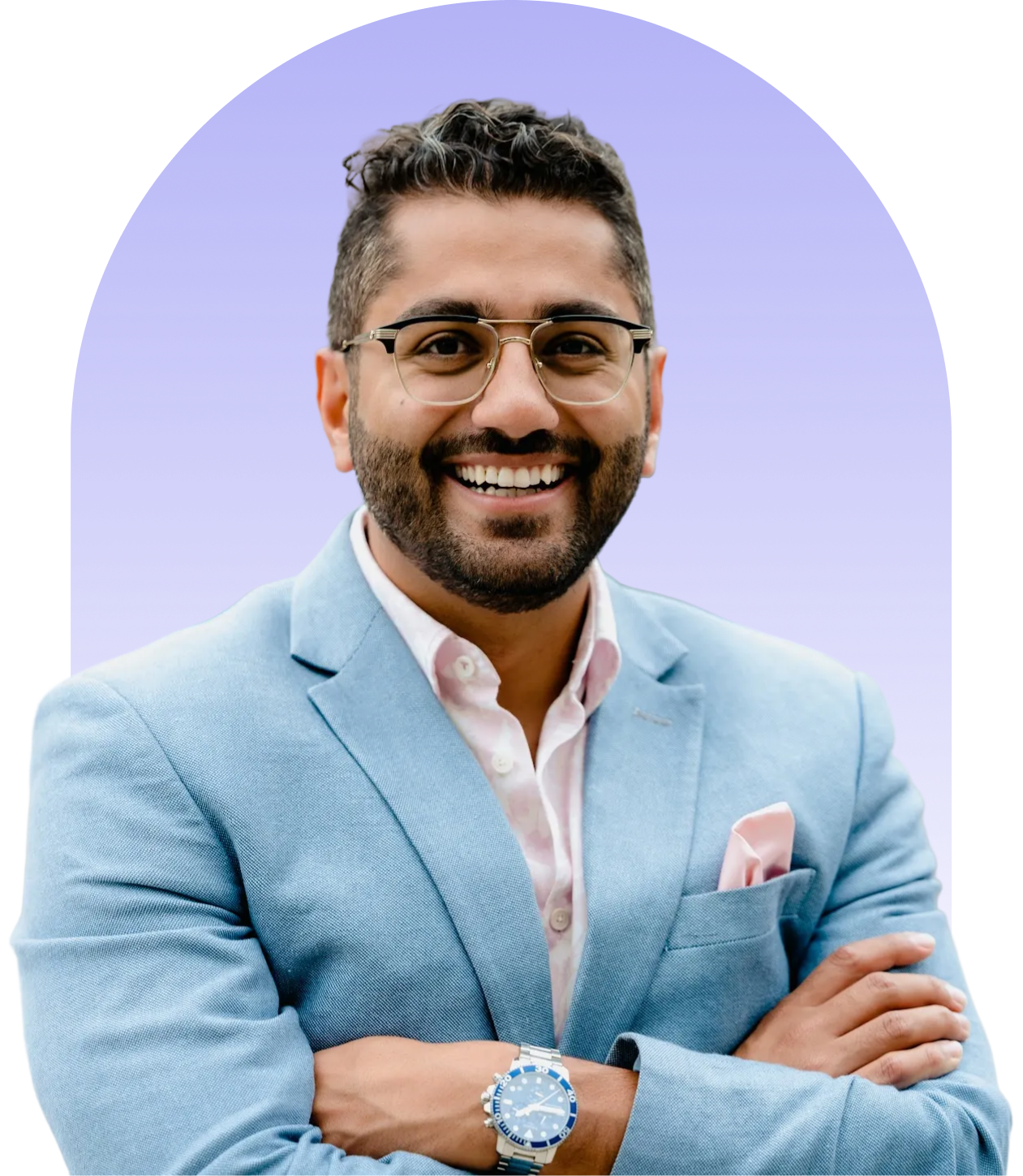
Gavin's assessment of Fahd was immediately positive:
"...he's incredibly engaging right from day one…that's the key word. I'd listened to a few of his podcasts to try and get an understanding of who he is and what his teaching is. He's got a lot of great energy and I could see that resonating with the team."
Gavin approached the evaluation systematically:
"I treated it as a bit of an interview. When I'm interviewing candidates, I look for how the person is going to fit into the team. With Fahd, it was immediately apparent that he would fit into the team, the team would fit with him and there would be that fundamental trust."
However, Gavin had some concerns about generational fit. With a team spanning from leaders older than him to those more than a decade younger, he questioned whether Fahd’s style would resonate across the board:
"At first, I wondered if Fahd’s millennial style would resonate across our wide age range of leaders. But he has the tenacity to break through those barriers quickly, and it was clear he could connect and resonate with every generation in the room."
It raises a powerful question for any leader: how often do we underestimate whether new approaches will connect? Exchanger’s experience shows that with the right facilitator, style becomes less of a barrier and more of a bridge across generations.
"The program absolutely met expectations on multiple levels. It gave us the foundation to work better together as a team, and it gave me the confidence to step back, knowing they can collaborate effectively and deliver without me needing to oversee every detail."

The program's structure was carefully designed to address different leadership levels and dynamics, and involved 20 total participants across three cohorts:
Gavin explained the strategic thinking behind this structure:
"We went to cohort three because we had two individuals that we had specifically targeted for promotion as ‘up and comers’ that I wanted to go through the program, but I didn't want them going through the program in the same cohort as their direct manager. And so we built a third cohort around those two individuals so that they could get the benefit of the experience."
The program consisted of 12 core sessions, scheduled at least every two-to-three weeks, and accommodating for vacations or other schedule obligations. In addition, the program included strategic facilitation for each cohort, and included some ad hoc sessions with the senior leadership team.
The significant time investment made by members of all three cohorts demonstrated both commitment and the comprehensive nature of the transformation needed.
When asked if the investment met expectations, Gavin was unequivocal:
"...It definitely met expectations on a few different levels."
For Gavin’s direct team, the impact was foundational:
"I think the year-long process of having to have these fragile conversations with each other, of having to be open and work through some of it... I think going through the course and learning together definitely helped establish a significantly stronger team that we've been able to leverage."
The practical benefits became immediately apparent:
"It definitely allowed us to break through some of the tension points more easily. The tension points still come up and you still feel them, but I feel like the team is better equipped on how to recognize it, move through it, and then get on with the real work."
The impact on Cohorts 2 and 3 was particularly remarkable:
"With the rest of the management team, outside of the senior leadership team, I've seen a ton of dividends out of it. That group, on their own volition, still meets every single week as a team and just talks through issues…I don't know if I see 50% of what comes out of that meeting."
This self-organizing behaviour demonstrated deep cultural change:
"I think some of it is probably just commiserating and, it's almost therapy for them because they've gotten used to having that dialogue and being able to lean on each other for what they're going through, which has its own benefits."
The experience of navigating and participating in the Unicorn Labs leadership program created a more empowered workforce:
"They're talking to each other about issues within the business, what they can do to fix it, and what they can push towards me in terms of, ‘hey, here's where we need support, here's what we want to get out of it.’ So they've definitely understood...they're definitely more empowered and they have the elements of trust and psychological safety that Fahd talks about."
Gavin recalled specific exercises that became part of the team's ongoing vocabulary:
“At the summit, we did this exercise with marbles on little bobsled tracks. The goal was simple: work together to get three marbles down the track. When we came back from the offsite and started talking about innovation and throwing around new ideas the team would say, ‘The idea isn’t fully developed yet, but at least we’ve got the marbles on the track.’ Before I could even weigh in on the idea, they were already framing it that way, showing me the deeper lesson they had taken away.”
Perhaps most remarkably, team members took initiative to share learnings with other team members, and to re-enact certain team-building exercises that Fahd shared. Gavin reflected on a specific situation he noticed entering the Exchanger offices:
"I was walking into the building one morning and the boardroom door was open and there was a group of about eight of them in the boardroom, including the two people who hadn't been at the session. I could hear all this ruckus inside, and sure enough, they actually had one of the broomsticks in the boardroom and they're going through Unicorn Labs’ ‘helium stick’ exercise."
This demonstrated that the learning had become self-sustaining and peer-driven.
Part of the Unicorn Labs Team Dynamics Assessment is an activity that compares results from the Exchanger participant survey at the start, and at the end, of the training that allows for measurement of the impact across the six key leadership competency areas. This was one of the tools used to measure the quantitative impact, and allow Gavin to also notice the qualitative gains:
Gavin connected the leadership development directly to the team’s behaviour changes and business results:
"I'm seeing the team making better decisions. I'm definitely seeing the results come through in terms of the financials [and] in terms of people's commitment to being able to hit objectives and understand what we're trying to do...The Unicorn Labs training is what has created the foundation for us to be able to do that."
Gavin was pleased to see participants begin to integrate their learning DISC assessment into daily operations:
"People will take that blunt question that I asked them in the meeting and be like, ‘oh yeah, Gavin's [a] high D, high C. He just wants the short answer…get to the point, give him the short answer.’ We do see that playing out with some of the people in terms of treating others the way they want to be treated."
Those tangible impacts led to expansion plans of DISC across the entire organization:
"We're going to have Fahd do the DISC for the rest of the company, so all of our salaried staff, and that way the managers that took the DISC can start to understand their different employees and peers."
Beyond the core program, Unicorn Labs became a trusted facilitation partner:
"We've leveraged Fahd outside of the core training. We had a couple of issues that we needed to deal with and I brought Fahd in as a facilitator to help us work through those because he had established that trust with the whole team... for the same reasons, we had him help facilitate a strategic summit last year when we were coming up with our objectives and key results."
The most telling indicator of success was the sustainability of changes:
"With the rest of the management team, even outside of the senior leadership team, I've seen a ton of dividends.. That group, on their own volition, still meets every single week as a team and just talks through issues."
The program created a leadership development cascade:
"I'm definitely seeing [the impact] in some of their managerial skills, coming through with how they're working with staff and how they're operating in the company."
Perhaps most importantly, the program established a foundation for ongoing growth: "The Unicorn Labs leadership training is what has created the foundation for us to be able to do that - for both the team being able to work with each other, but also for me to be able to trust the team to get it done. I can take my hands off of it and have confidence that they know how to work together, they know what they're doing."
.png)
When Gavin Exon inherited a fragmented leadership team at Exchanger Industries, a 64-year-old manufacturing company, he could identify dysfunction at every level that threatened both growth and basic operational sustainability.
Through Unicorn Labs' comprehensive six-month program involving 20 leaders across three cohorts, the company achieved remarkable transformation with 93% completion rates and measurable improvements across all six leadership dimensions, including a 7.14% increase in Sense of Purpose and 6.53% boost in Culture of Leadership.
The true validation came six months later: middle management teams continue meeting weekly without external prompting, psychological safety enables courageous conversations in critical business moments, and Gavin now leads with complete confidence in his team's autonomous capabilities.
For CEOs seeking measurable, sustainable leadership transformation that extends far beyond traditional training, Exchanger Industries' journey demonstrates how the right program design, expert facilitation, and genuine commitment can turn organizational dysfunction into a foundation for lasting excellence and business results.


"I'm definitely seeing the team making better decisions. I'm seeing [the financials] coming through in terms of people's commitment to being able to hit objectives and understand what we're trying to do.”

When Gavin Exon stepped into his role as President of the Canadian division of Exchanger Industries, he inherited a leadership team marked by long tenure, siloed thinking, and low trust. Some team members had been with the company for over three decades, while others were new and struggling to find footing. There was no shared definition of leadership, psychological safety was low, and internal efforts to fix the dysfunction had failed. The culture was stagnant, and high-potential leaders were losing patience.
"We weren’t high-performing," Gavin recalled. "We were dysfunctional, and we weren’t even hitting the basics."
Exchanger partnered with Unicorn Labs to roll out a structured leadership development program across three cohorts, involving 20 leaders from different levels. Over six months, the Unicorn Labs team delivered a mix of DISC assessments, live group training, executive coaching, and strategic offsites. Fahd's facilitation created space for honest conversations, surfaced blind spots, and introduced shared language and tools for collaboration. This wasn’t just training, it was a full culture reset.
From structured modules to custom facilitation, Unicorn Labs gave Exchanger's leaders the space, tools, and trust to grow together.
The outcomes were immediate and lasting. Teams began leading their own cross-functional check-ins. Leaders made difficult decisions with more clarity and confidence, and company-wide metrics showed measurable progress in culture and communication.

Six months after completing the Unicorn Labs program, Gavin's middle management team continues to meet weekly on their own initiative, building on the 93% program completion rate that shows their genuine commitment from day one.
The program's psychological safety training manifested in high-stakes moments, with team members now delivering challenging but necessary feedback directly to leadership, transforming decision-making quality throughout the organization.
Gavin can now step back and trust his team to collaborate and deliver, knowing the foundation is rock solid, evidenced by measurable improvements across all six leadership areas, including a 7.14% increase in Sense of Purpose and 6.53% boost in Culture of Leadership.

When Gavin Exon stepped into his role as President of Exchanger Industries, a 64-year-old heat exchanger manufacturing company with 500+ employees and 9-figures in revenue, he inherited more than just a business he inherited a leadership challenge that threatened the company's future growth and sustainability.
Despite having incredible tenure within the organization, the leadership team was fragmented, dysfunctional with a fractured structure, spanning new hires and 30+ year veterans. Even with some impressive technical excellence, team dynamics were holding the company back.
Beneath the surface of this established company lay significant leadership challenges that would soon demand immediate attention and strategic intervention.
When asked to describe the chemistry between leadership teams prior to engaging with Unicorn Labs, Gavin's response was immediate and telling: "Disparate, fragmented."
He elaborated on the root of these challenges, explaining how the company's incredible tenure, while valuable, had created limitations.
"We have something that’s incredible: many of our people have been here for decades, some nearly half a century. But the flip side is that such long tenure can sometimes limit exposure to different perspectives and alternative ways of approaching business and leadership.”
Gavin's business acumen helped him identify the specific nature of their dysfunction:
“What resonated with me was that the team was dysfunctional. I’ve studied a lot of business frameworks, and Patrick Lencioni’s Five Dysfunctions of a Team really stood out. I could point to examples of each dysfunction playing out within our team.”
The situation was so concerning that Gavin had already attempted intervention: "I even went to the point of assigning a couple of our managers to read five dysfunctions of a team trying to get them to see it."
This dysfunction wasn't limited to just his direct team; it cascaded throughout the organization, creating a leadership crisis that demanded immediate and comprehensive attention.
For Gavin, the dysfunction wasn't just a performance issue, it was an existential threat to the company. "Ultimately in business, it all boils down to the results. I just knew that we weren't going to be able to achieve the growth results that we were looking for without change, and I was actually concerned that we weren't even able to achieve basic results to sustain the company."
Perhaps more concerning was the impact on their best people: "The other part of that risk is I was noticing that the right people… the ones you want on the proverbial bus… were getting frustrated, seeing them in despair, not able to make things move the way they needed to. You risk losing those key people and then that sets you back even further."
This talent retention risk created urgency around finding a solution that could not only address the immediate dysfunction but also re-engage and retain their most valuable team members.
Gavin brought significant experience with leadership development programs to his search for the right solution. "I used to work for General Motors for a period of time, and their training regimen was exceptionally strong in terms of their leadership program. So I've been through a fair bit of that.”
However, those previous experiences highlighted a key difference:
"Now, in that particular company, I was already part of a high-functioning team, so we had super high engagement, high performance, high focus on results, whereas that fundamental alignment just didn't exist at Exchanger."
The path to Unicorn Labs came through a trusted referral of Gavin’s:
"I was introduced to Unicorn Labs through another one of their clients and [I am] good friends with the CEO there. I was asking him for some advice on leadership training and what they've done, and so he introduced me to Unicorn Labs."
This referral approach proved crucial in establishing initial credibility and openness to the process.
Gavin's first interactions with the Unicorn Labs team, particularly Abigail (Account Executive), set a professional tone: "When I started meeting with Abigail, it was absolute professionalism, with a great work package that they'd put together…it seemed like a comprehensive overview."
What particularly impressed Gavin was the academic rigor behind the program:
"I immediately recognized elements from Patrick Lencioni and Jim Collins’ work embedded in the program. What struck me was, ‘wow, here’s somebody who’s taken a decade of reading that I’ve also done and distilled it into a practical, accessible package. It resonated even with leaders who haven’t had formal business training.’"."
This recognition of solid academic foundations within an accessible framework became a key differentiator in his decision-making process.
Beyond branding, Gavin had practical concerns about the investment:
"...there’s always a financial component when you’re bringing 20 people into a program. Beyond the investment in Unicorn Labs’ services, I had to weigh the opportunity cost of taking leaders away from their day-to-day work. But in the end, the return, both in team development and business impact, far outweighed those concerns."
The strategic concerns were equally important:
"There's always that doubt of bringing in somebody else. What are they going to say? Is that going to be aligned with my values and what I'm trying to teach in the leadership [team]? Is it going to contradict? Is it going to set us back?"
These concerns demonstrate the thorough due diligence process that led to his eventual decision to move forward.

Gavin's assessment of Fahd was immediately positive:
"...he's incredibly engaging right from day one…that's the key word. I'd listened to a few of his podcasts to try and get an understanding of who he is and what his teaching is. He's got a lot of great energy and I could see that resonating with the team."
Gavin approached the evaluation systematically:
"I treated it as a bit of an interview. When I'm interviewing candidates, I look for how the person is going to fit into the team. With Fahd, it was immediately apparent that he would fit into the team, the team would fit with him and there would be that fundamental trust."
However, Gavin had some concerns about generational fit. With a team spanning from leaders older than him to those more than a decade younger, he questioned whether Fahd’s style would resonate across the board:
"At first, I wondered if Fahd’s millennial style would resonate across our wide age range of leaders. But he has the tenacity to break through those barriers quickly, and it was clear he could connect and resonate with every generation in the room."
It raises a powerful question for any leader: how often do we underestimate whether new approaches will connect? Exchanger’s experience shows that with the right facilitator, style becomes less of a barrier and more of a bridge across generations.
The program's structure was carefully designed to address different leadership levels and dynamics, and involved 20 total participants across three cohorts:
Gavin explained the strategic thinking behind this structure:
"We went to cohort three because we had two individuals that we had specifically targeted for promotion as ‘up and comers’ that I wanted to go through the program, but I didn't want them going through the program in the same cohort as their direct manager. And so we built a third cohort around those two individuals so that they could get the benefit of the experience."
The program consisted of 12 core sessions, scheduled at least every two-to-three weeks, and accommodating for vacations or other schedule obligations. In addition, the program included strategic facilitation for each cohort, and included some ad hoc sessions with the senior leadership team.
The significant time investment made by members of all three cohorts demonstrated both commitment and the comprehensive nature of the transformation needed.
When asked if the investment met expectations, Gavin was unequivocal:
"...It definitely met expectations on a few different levels."
For Gavin’s direct team, the impact was foundational:
"I think the year-long process of having to have these fragile conversations with each other, of having to be open and work through some of it... I think going through the course and learning together definitely helped establish a significantly stronger team that we've been able to leverage."
The practical benefits became immediately apparent:
"It definitely allowed us to break through some of the tension points more easily. The tension points still come up and you still feel them, but I feel like the team is better equipped on how to recognize it, move through it, and then get on with the real work."
The impact on Cohorts 2 and 3 was particularly remarkable:
"With the rest of the management team, outside of the senior leadership team, I've seen a ton of dividends out of it. That group, on their own volition, still meets every single week as a team and just talks through issues…I don't know if I see 50% of what comes out of that meeting."
This self-organizing behaviour demonstrated deep cultural change:
"I think some of it is probably just commiserating and, it's almost therapy for them because they've gotten used to having that dialogue and being able to lean on each other for what they're going through, which has its own benefits."
The experience of navigating and participating in the Unicorn Labs leadership program created a more empowered workforce:
"They're talking to each other about issues within the business, what they can do to fix it, and what they can push towards me in terms of, ‘hey, here's where we need support, here's what we want to get out of it.’ So they've definitely understood...they're definitely more empowered and they have the elements of trust and psychological safety that Fahd talks about."
Gavin recalled specific exercises that became part of the team's ongoing vocabulary:
“At the summit, we did this exercise with marbles on little bobsled tracks. The goal was simple: work together to get three marbles down the track. When we came back from the offsite and started talking about innovation and throwing around new ideas the team would say, ‘The idea isn’t fully developed yet, but at least we’ve got the marbles on the track.’ Before I could even weigh in on the idea, they were already framing it that way, showing me the deeper lesson they had taken away.”
Perhaps most remarkably, team members took initiative to share learnings with other team members, and to re-enact certain team-building exercises that Fahd shared. Gavin reflected on a specific situation he noticed entering the Exchanger offices:
"I was walking into the building one morning and the boardroom door was open and there was a group of about eight of them in the boardroom, including the two people who hadn't been at the session. I could hear all this ruckus inside, and sure enough, they actually had one of the broomsticks in the boardroom and they're going through Unicorn Labs’ ‘helium stick’ exercise."
This demonstrated that the learning had become self-sustaining and peer-driven.
Part of the Unicorn Labs Team Dynamics Assessment is an activity that compares results from the Exchanger participant survey at the start, and at the end, of the training that allows for measurement of the impact across the six key leadership competency areas. This was one of the tools used to measure the quantitative impact, and allow Gavin to also notice the qualitative gains:
Gavin connected the leadership development directly to the team’s behaviour changes and business results:
"I'm seeing the team making better decisions. I'm definitely seeing the results come through in terms of the financials [and] in terms of people's commitment to being able to hit objectives and understand what we're trying to do...The Unicorn Labs training is what has created the foundation for us to be able to do that."