



Tablz is a premium booking concierge platform for the world's most sought-after dining and hospitality venues. Using advanced 3D camera technology, the company maps the interiors of standout steakhouses, rooftops, skylines, and beach clubs so guests can see exactly where they'll sit and access the premium seats and VIP experiences that traditional reservation systems make difficult to book. Tablz integrates with platforms like OpenTable and layers a richer booking experience on top, giving guests the ability to choose the right table and add the touches that make an occasion feel special.
Founded in Ottawa, Tablz today operates across four continents with a lean, focused team of nine spanning product, go-to-market, and operations. The company is venture-backed, having raised a $2M USD pre-seed round, and has since achieved meaningful milestones, surpassing $1M in revenue and gross booking volume in the millions.
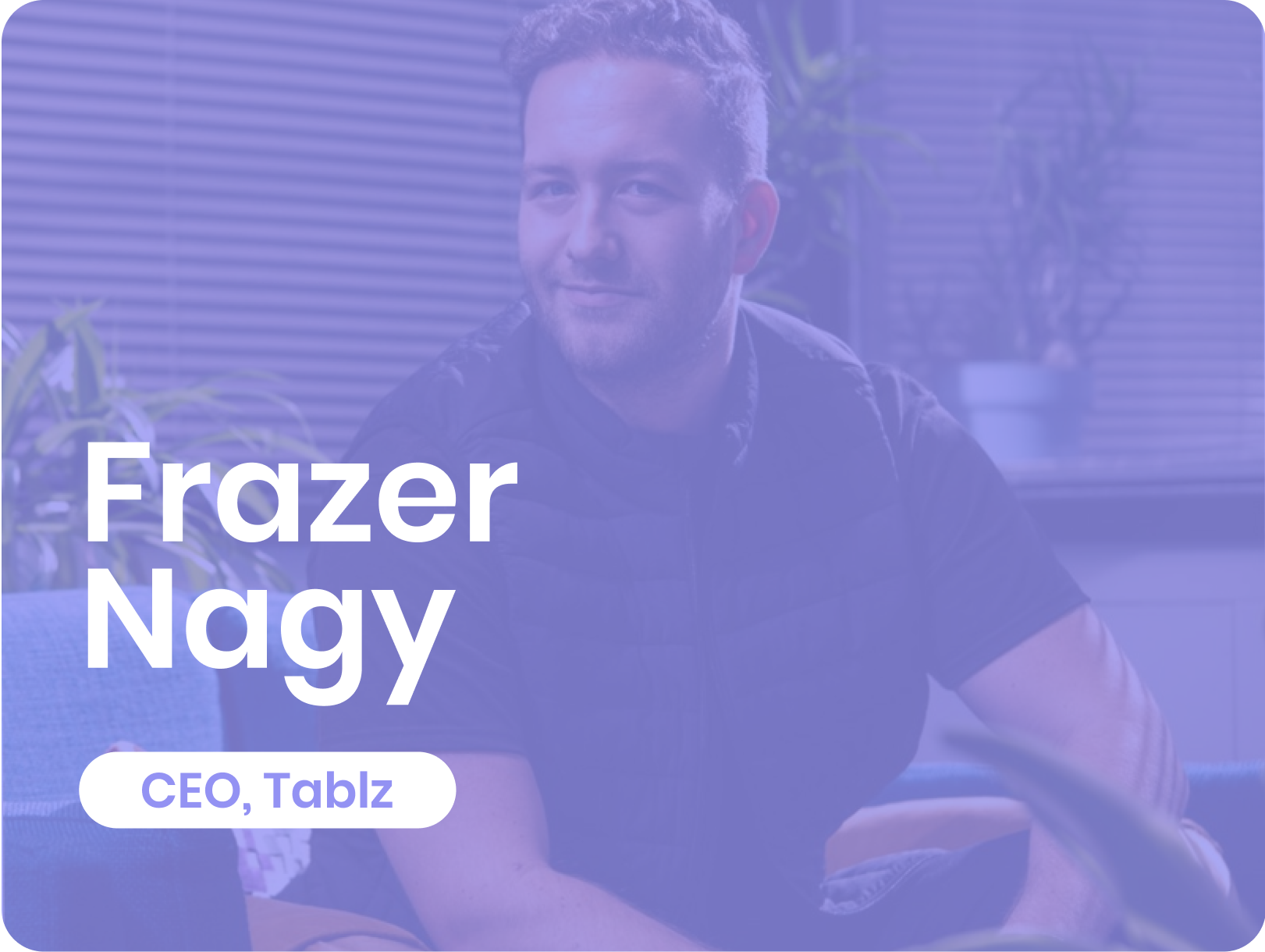
Tablz emerged as a "rebirth" of CEO and founder Frazer Nagy's earlier venture, building on hard-won lessons from a first company that weathered the pandemic. What's notable about the company's trajectory is its discipline: an earlier, larger headcount of roughly 25 gave way to a deliberately leaner team as Tablz sharpened its focus on its ideal customer and product-market fit. Reaching four continents with nine people is a testament to how much that focus paid off.
But the path there ran straight through one of the hardest stretches a leadership team can face.
Like many venture-backed startups, Tablz's leadership team hit a period of profound internal strain. A difficult leadership transition and the dynamics surrounding it placed real pressure on the team, and by Frazer's account, on the business itself. Term sheets went unfunded. The leadership group spent a long stretch absorbing emotional weight rather than building.
What's worth holding on to here is the strength beneath the strain. This was not a team that lacked a foundation. Frazer's core group had worked together for roughly eight years, bound by genuine trust and care. That history is exactly why the period was so hard, and exactly why the team was worth investing in.
"When that's broken at that level, it is earth-shattering and hard to recover from."
Tablz didn't come to Unicorn Labs looking for crisis support. Frazer reached out for what he expected to be standard executive and leadership training off-sites, frameworks, and the bread-and-butter work of levelling up a young leadership team. What unfolded was something deeper.
"It wasn't supposed to be this emotional. It wasn't supposed to be this therapeutical."
Frazer first met Fahd Alhattab through Invest Ottawa, but the engagement really began with a referral a fellow founder who had worked with Unicorn Labs on an offsite and had a genuinely positive experience to share.
That trusted recommendation made the decision easy. For a founder navigating cash constraints and competing priorities, a referral from someone who'd been in the room removed the guesswork and built trust before the first conversation even started.
A grant available at the time made the initial program financially viable for a small team, something Frazer still flags as important context for other early-stage founders.
.png)