


Psychological Safety Exercises for Remote Engineering Teams
Your senior engineer hasn't spoken in three standups. Not a question. Not a flag. Not even a reaction emoji. She's there on the call, camera off, doing her job. And nobody notices because, technically, nothing is wrong.
That silence is the most expensive thing on your team.
Not because she's disengaged. But because she saw a flaw in the architecture last Tuesday and decided it wasn't worth the interpersonal risk of bringing it up. She's watched what happens when people challenge ideas in this group. The polite dismissal. The "let's take that offline" that never gets followed up. She's done the math, and staying quiet is safer.
This is what a lack of psychological safety looks like on a remote team. Not dramatic blowups. Not crying in meetings. Just smart people keeping their best thinking to themselves. And if you're leading a distributed engineering team, this pattern is costing you more than you realize.
Why Psychological Safety Exercises Hit Different on Remote Teams
Amy Edmondson, the Harvard Business School professor who coined the term, defines psychological safety as a shared belief that the team is safe for interpersonal risk-taking. It's not about being nice. It's about creating a work environment where team members can own mistakes, share ideas, ask questions, and push back without fear of embarrassment or punishment.
Google's Project Aristotle confirmed it: psychological safety is the number one predictor of high-performing teams. Above dependability. Above structure. Above meaning. It is the foundation upon which everything else is built.
But here's the tension that most team leaders miss: the conditions that build psychological safety in person don't translate neatly to remote work.
In a physical office, trust gets built in the hallway. In the body language you read during a debate. In the coffee runs and the side conversations after a tough meeting. The pandemic stripped all of that away. And while remote work gave us flexibility, it also removed the ambient cues that help people feel seen and safe.
Virtual meetings are performance spaces. You're on camera, framed in a little box, hyper-aware of every word because the margin for misinterpretation is enormous. Without tone of voice nuance and body language, even a well-intended Slack message can land as cold or dismissive. Team members second-guess themselves. They wait for someone else to speak first. They default to agreement.
So when we talk about psychological safety exercises for remote teams, we can't just port over the in-person playbook. We need exercises designed for the reality of screens, time zones, and the peculiar loneliness of working alongside people you've never shared a room with.
The Four Stages of Psychological Safety (and Why They Matter for Remote)
Timothy Clark's model gives us a useful lens here. He describes four stages of psychological safety that build on each other:
- Inclusion safety is the first stage. It's the feeling that you belong on this team, that your presence is welcomed. On a remote team, inclusion safety erodes fast. When you never bump into someone in the kitchen, when your only interactions are transactional standups, you can start to feel like a contractor rather than a colleague.
- Learner safety is the permission to ask questions, experiment, and make mistakes without being labeled as incompetent. For engineers, this is everything. Software development is fundamentally about problem-solving in the face of uncertainty. If your team doesn't have learner safety, people will hide what they don't know instead of seeking help.
- Contributor safety means feeling safe to contribute your own ideas and skills. This is where brainstorm sessions either come alive or die. On remote teams, contributor safety is undermined by the "loudest voice" dynamic in virtual meetings, where one or two people dominate and everyone else fades into their muted microphones.
- Challenger safety is the pinnacle. It's the ability to challenge the status quo, to push back on leadership, to say "I think we're making a mistake." This is the hardest level to reach, and it's also the most valuable. The teams that ship great products are teams where a junior developer feels safe flagging a concern to the CTO.
Understanding these levels of psychological safety helps you target your exercises. You can't build challenger safety if your team doesn't even feel included.
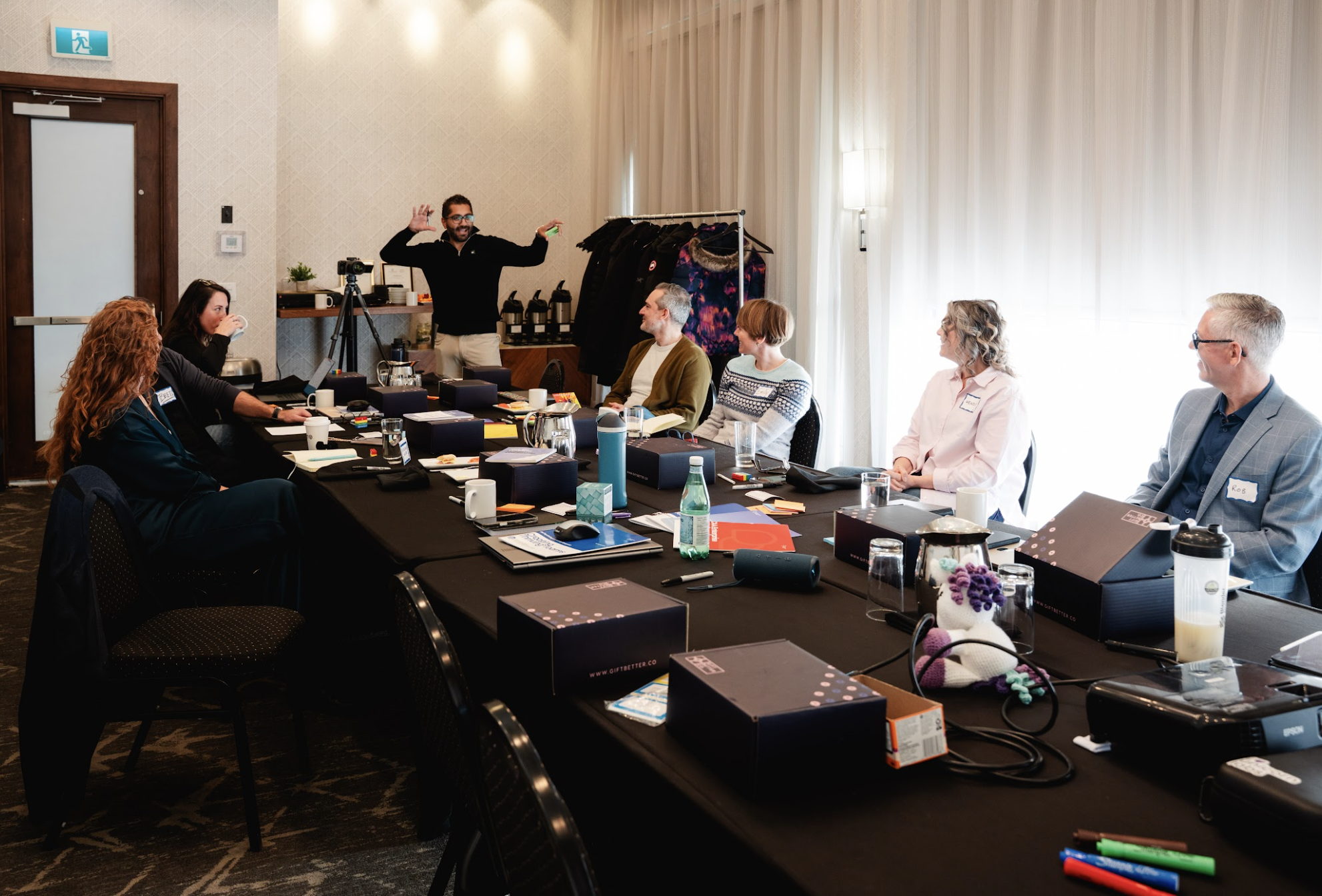
Exercises That Build a Psychologically Safe Environment Across Screens
Here's what I've seen work. Not in theory. In actual engineering teams I've coached, from 6-person startups to 200-person product orgs. Every one of these exercises was designed for, or adapted to, the virtual team context.
1. The "Red Card, Green Card" Check-In
This one is deceptively simple, and it's one of the best icebreaker formats I've used with remote teams. At the start of a team meeting, everyone types either a red, yellow, or green emoji into the chat. Green means "I'm good, let's go." Yellow means "I'm here but carrying something." Red means "I'm struggling today."
No one has to explain their choice. But the act of making everyone's state visible changes the energy of the meeting. A team leader who sees three yellows and a red knows to slow down, check in, and not barrel through the agenda. It takes 30 seconds and builds inclusion safety by signaling that the whole team, not just the work output, matters.
The magic of using emojis in virtual meetings is that they lower the barrier. You don't have to craft a vulnerable sentence. You just drop a colour. Over time, people start elaborating on their own. That's when you know trust is forming.
2. "Chapters of Our Lives"
This is a vulnerability exercise we use in our leadership programs and it translates beautifully to remote. Each team member shares three to five "chapters" of their life, like a book's table of contents. Not a full biography. Just the chapter titles. Someone might share: "Growing Up in Lagos," "The Year Everything Changed," "Finding My Way Into Code," "Becoming a Parent."
Run this in a dedicated session, not squeezed into a standup. Give people a week's notice so they can reflect. The exercise builds inclusion safety by helping team members see each other as complete human beings, not just engineers who appear in a video call window.
I've watched teams transform after this exercise. When you know your teammate left a career in medicine to learn to code, you interact with them differently. You give more grace. You assume good intent. You build trust without even trying.
3. The Blameless Postmortem (Done Right)
Most engineering teams already run postmortems. But there's a difference between a postmortem that's technically blameless and one that's psychologically safe.
Here's the test: does your whole team actually contribute, or does one senior person narrate while everyone else nods? Do people share what they personally missed, or do they speak only in passive voice about "the system"?
To make postmortems a genuine psychological safety exercise, try facilitating them with two rules. First, every person on the call has to name one thing they would do differently. Not "the team." Not "we." I. Second, the team leader goes first. When team leaders model vulnerability by admitting their own mistakes, they give everyone else permission to do the same.
This is fostering psychological safety through structure, not speeches. You're creating a safe space by making honesty the norm rather than the exception.
4. The "Honest Feedback" Lightning Round
This one requires some existing trust, so save it until your team has been working on inclusion and learner safety for a while.
In a one-on-one or small group setting, ask each person to share one piece of honest feedback they've been sitting on. It can be about a process, a tool, a decision, or a team dynamic. The only rule: the person receiving the feedback thanks them and asks one clarifying question. No defending. No explaining. Just listening.
The reason this works in a remote context is that it's structured. Open communication doesn't happen by accident on distributed teams. You have to design moments where candor is expected and rewarded. Harvard Business Review research consistently shows that teams who give and receive feedback regularly outperform those who don't, but only when the environment makes it safe to be direct.
5. The Virtual "Coffee Roulette"
This isn't new, but it's underused. Pair random team members for a 15-minute virtual coffee each week. No agenda. No work talk required. Just two humans getting to know each other.
The data from Microsoft's research on remote work is clear: when people lose weak ties (those casual, cross-functional connections), collaboration suffers and silos harden. Coffee roulette rebuilds those ties intentionally. For remote teams, these casual connections are the foundation of teamwork and open communication. They're how you move from "coworker I've never spoken to" to "person I trust enough to disagree with in a design review."
Why Team Leaders Have to Go First
Every one of these psychological safety exercises has a common requirement: the leader has to model the behaviour before anyone else will follow.
If you want your team to share when they're struggling, you share first. If you want honest feedback, you ask for it publicly and respond with curiosity, not defense. If you want people to admit mistakes, you talk about your own.
I learned this the hard way. Early in my career, I led with high expectations and not enough support. I wanted my team to be brave and open, but I wasn't demonstrating what that looked like. I was asking for vulnerability without offering any of my own. It doesn't work that way.
Building psychological safety on a remote team isn't a one-time workshop or a LinkedIn post about "creating a culture of trust." It's a practice. It lives in how you run your team meetings, how you respond when someone flags a problem, how you react when a sprint goes sideways. It shows up in the small, repeated moments where your team learns whether it's actually safe to be themselves.
The well-being of your team and the performance of your product are not competing priorities. They're the same thing. A psychologically safe workplace is where your best engineers do their best work. Where risk-taking leads to breakthroughs instead of blame. Where company culture becomes the thing that keeps people around, not just the compensation package.
Start With One Exercise. See What Shifts.
You don't need to overhaul your entire team culture in a week. Pick one exercise from this list. Try it in your next team meeting. Watch what happens.
The shift is never dramatic at first. It starts with one person sharing something they normally wouldn't. One question that would have gone unasked. One moment of honesty that opens a door.
That's how you build psychological safety on a remote team. Not through grand declarations, but through small, repeated acts of courage that your team learns to trust.
Want to assess where your team stands across all six levels of high-performing teams?
Take the Team Dynamics Assessment and get a clear picture of your team's psychological safety, communication, and trust, so you know exactly where to focus. Or check out our podcast where we unpack these ideas with real leaders building real teams.
FAQs
Now that you have mastered how to manage conflict - what is your plan of action for making an impact with your team?
Now that you have mastered how to create an environment of empowerment via the 3-P's - what is your plan of action for making an impact with your team?
Developing Your Communication, Empathy and Emotional Intelligence skills is start. What is your plan of action for implementing your learnings within your your team?
Now that you understand the differences in these titles - what is your plan of action for what you learned?
Assessing your team's behaviors is a start - but do you have a plan of action for the results?
Now that you have mastered the art of decision making - what is your plan of action for making an impact with your team?
.png)
A DISC Behaviour Assessment is the best way to understand your team's personalities.
Each DISC Assessment includes a Self Assessment and DISC Style evaluation worksheet
.webp)


