


The Founder Bottleneck: Stop Being the Person Every Decision Runs Through
You're on your fifth meeting of the day. Three of them were decisions that shouldn't require you. Your engineering lead is waiting on your approval to ship. Your head of marketing needs a yes before they can launch the campaign. Your ops person just Slacked you about a vendor contract that's been sitting in your inbox for four days.
Nobody can move without you. And here's the brutal part: you built it this way.
Not on purpose. But when you were the only one who knew how to make decisions, when you were the one who cared most, moved fastest, and had the most context, it made sense for everything to flow through you. It doesn't anymore. And every day you stay the bottleneck is a day your company grows slower than it should.
Research backs this up. A Gallup study of Inc. 500 CEOs found that founders who delegate effectively generate 33% more revenue than those who centralize decisions. Separate research on 122 startups by leadership researcher Richard Hagberg found that 58% of founders were poor at delegating. Those companies plateaued earlier.
The founder bottleneck is one of the most quantifiable growth killers in the startup world. It's also one of the most personal.
Why Founders Become Bottlenecks (It's Not What You Think)
The standard story is that founders become bottlenecks because they're control freaks who don't trust their teams. Sometimes that's true. But in most of the founding teams I've worked with, the bottleneck happens for a different reason: the company's operating system never evolved.
When you were five people, it made sense for you to review everything. You had the context. There were no systems. Speed came from centralization. That worked.
Now you're at 50 or 100 people, and you're still the decision hub. Not because you designed it that way. Because nobody redesigned it. The systems never caught up with the headcount.
There's also something more personal underneath. Your identity as a founder is often tied to being the person who has the answers. When you know more than everyone else in the room, delegation feels like a risk. "What if they get it wrong? What if they don't care as much as I do? What if we ship something I wouldn't have shipped?"
These aren't irrational fears. They're just fears you can't afford to keep acting on.
The cost of staying the bottleneck is real. Decisions sit waiting. People wait to be trusted. And your company waits to grow.
The Five Signs You're the Bottleneck
You might already know. But here's the diagnostic to be sure:
1. People ask you questions they should be able to answer themselves. If your team is asking for approvals on decisions that fall clearly within their role, you haven't given them clear authority. You've given them a job description.
2. Your inbox is the company's primary to-do list. Unread emails represent blocked decisions. If your backlog grows every time you're in a meeting, you're the chokepoint.
3. Things get done faster when you're on vacation. This is the most honest signal. When the founder disappears and the team suddenly makes decisions, ships things, and figures it out. That's proof the bottleneck was the founder, not the team.
4. Your team asks for forgiveness, not permission. People stop bringing you things because they've learned the queue is too long. So they either do nothing or act without telling you. Neither is healthy.
5. You feel indispensable. This is the hardest one. If the thought of stepping away feels impossible, not because you're excited about your role but because the company genuinely can't function without you, that's not a compliment. That's a structural failure.
The Delegation Architecture That Actually Works
Here's what most delegation advice misses: delegation isn't a one-time handoff. It's an architecture.
You're not delegating tasks. You're delegating authority, context, and judgment. And that takes a different approach.
Step 1: Build a Decision Register
Start by listing every recurring decision that lands on your desk. Group them into four buckets:
- Must stay with me. Decisions only the founder can make: equity, board-level strategy, fundraising, key executive hires.
- Should transfer now. Decisions a team member already has the context and judgment to own.
- Will transfer after building the system. Decisions that need a framework, criteria, or training before being handed off.
- Shouldn't be a decision at all. Decisions that have become recurring approvals because nobody set the policy.
Most founders are shocked by how many things land in the second bucket. Not because they don't trust their team, but because they never formally transferred the authority.
Step 2: Transfer Authority, Not Just Tasks
The difference between "I need you to handle this" and "you own this" is huge. When you delegate a task, you stay accountable for the outcome. When you delegate authority, you hand over the judgment call.
For each domain you're delegating, have an explicit conversation:
"You own hiring decisions on your team for roles under $80K. I want to hear about it after, but I'm not in the loop before. If you're unsure, here's the framework I use: [criteria]. If the decision is outside those criteria, come to me. Everything within them is yours."
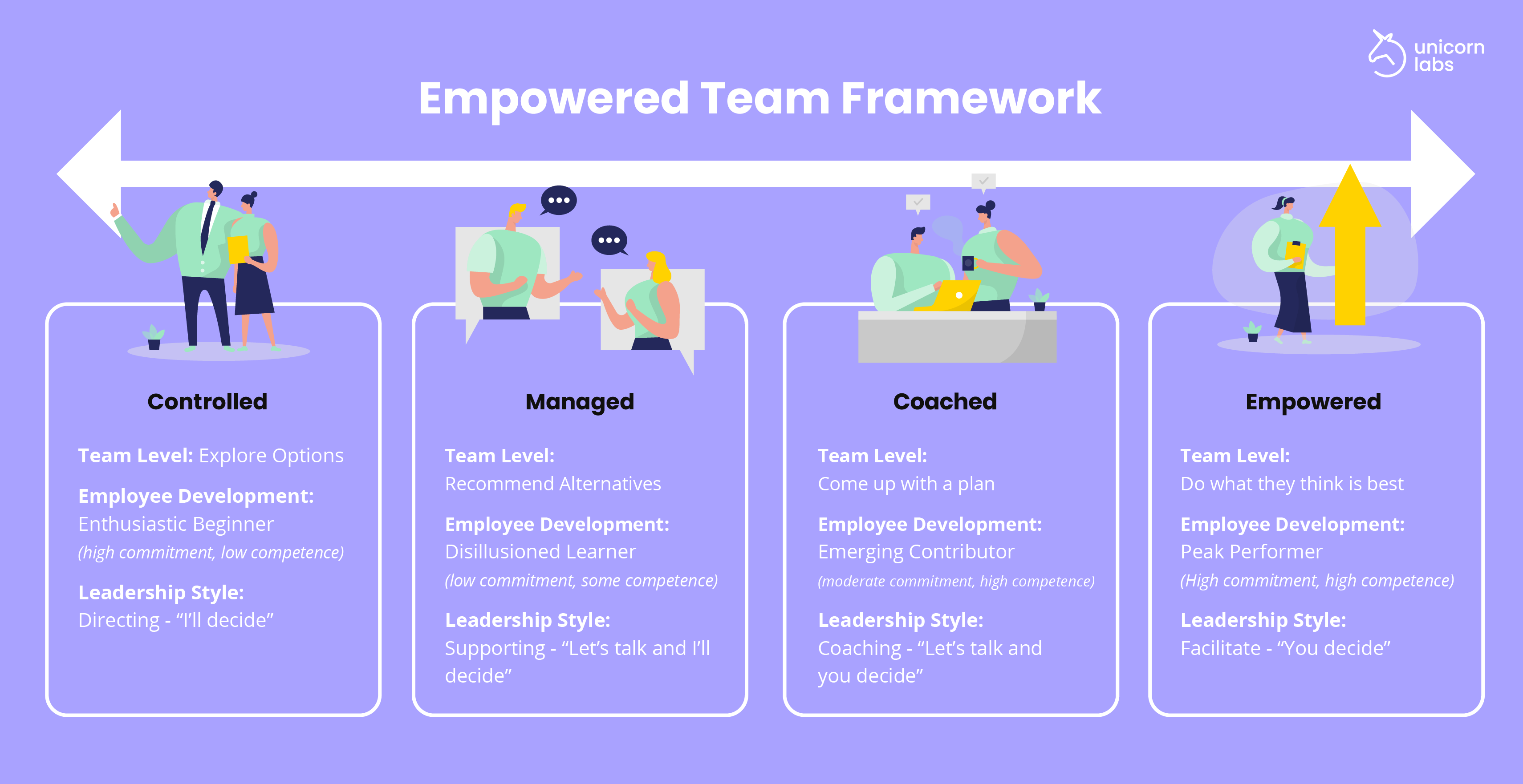
Clear scope. Clear criteria. Clear escalation path. That's delegation. But here's where most founders stall: delegation isn't a binary switch. It's a progression. You don't go from "I decide everything" to "they decide everything" overnight. You move through stages.
That's where the Empowered Team Framework comes in.
Step 3: Build an Operating Cadence That Replaces Founder Oversight
The reason founders stay bottlenecks is that they have no system to stay informed without being in every decision. An OKR and operating cadence replaces the founder as the coordination mechanism.
When your team has clear quarterly goals, weekly metrics reviews, and monthly leadership syncs, you don't need to be in every conversation. The cadence holds them accountable to outcomes. You hold the outcomes, not the decisions.
This is the core of what we call the Founder Operating System (FOS), the scaffolding that lets a company run without the founder being the connective tissue.
Step 4: Let People Fail — Appropriately
This is the part that doesn't make it into the delegation playbooks. You will delegate something and it will go wrong. Someone will make a call you wouldn't have made. A campaign will underperform. A hire will miss the mark.
That's not a reason to pull authority back. That's the tuition for building a leadership team.
But here's the thing: not all failure is equal. The fear of delegation is really a fear of failure. So you have to draw the line.
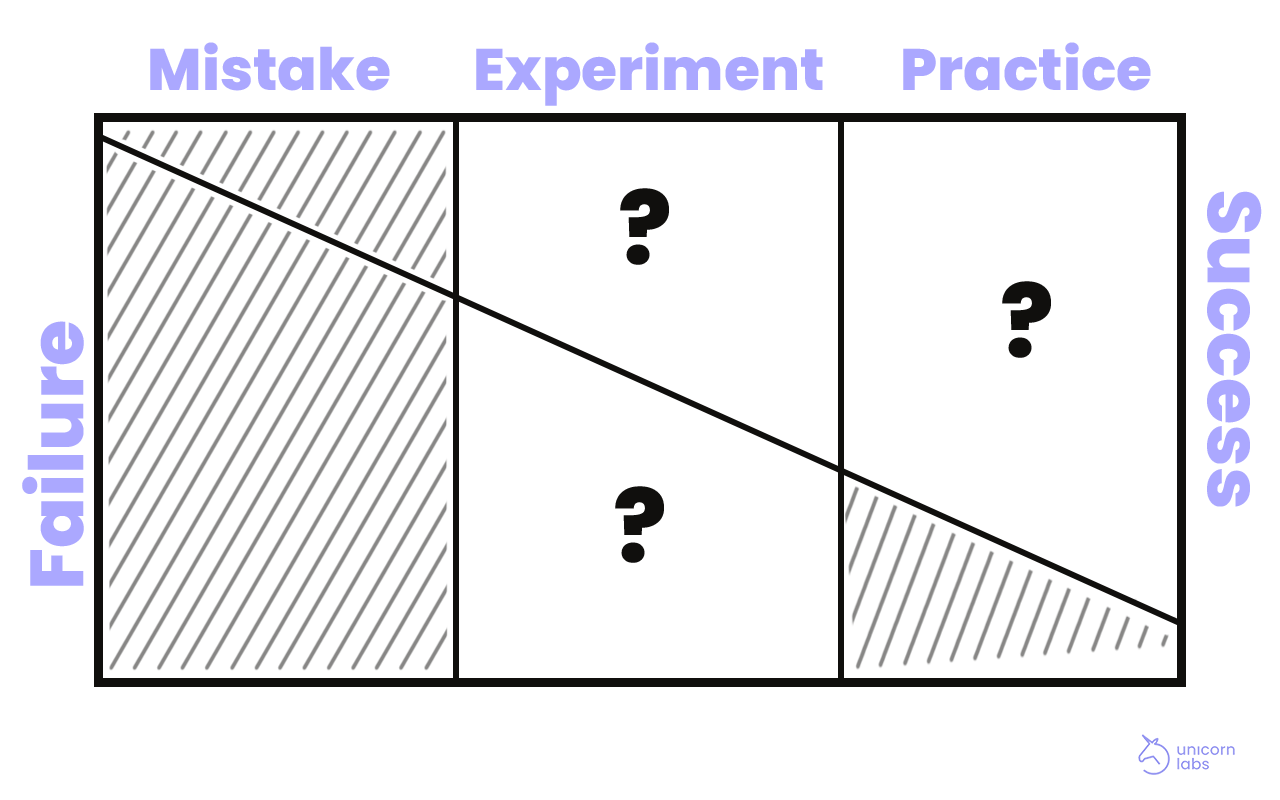
A reckless mistake is different from a thoughtful experiment. The Celebration Grid is a tool for helping your team see the difference. We don't celebrate mistakes that come from guessing blindly. We do celebrate intentional experiments, win or lose, and the practices that work. When you reward the learning, not just the outcome, you build a culture that can run without your constant oversight.
The founders who build great companies are the ones who let their people learn from low-stakes mistakes while keeping them out of high-stakes ones. The criteria is simple: can the company recover from this mistake? If yes, let them own it. If it's irreversible or catastrophic, it stays with you.
The Offsite That Changes Everything
One of the most impactful things a bottleneck founder can do is run a strategy offsite specifically designed to transfer decision authority to the leadership team.
Not a planning session. Not a team-building retreat. A working session where you explicitly map out: who owns what decisions, what the escalation criteria are, and what the operating cadence looks like going forward.
We've run this session with dozens of founding teams. The impact is consistent: in six months, founders report spending 40-60% less time on operational decisions. The team reports feeling significantly more trusted and empowered. And the company moves faster.
It's not magic. It's just a deliberate redesign of the operating system.
Want to know exactly which decisions you should stop owning? Check outthe free FOS Diagnostic: a 15-minute assessment that pinpoints your bottleneck and shows you where to transfer authority first.
FAQs:
Now that you have mastered how to manage conflict - what is your plan of action for making an impact with your team?
Now that you have mastered how to create an environment of empowerment via the 3-P's - what is your plan of action for making an impact with your team?
Developing Your Communication, Empathy and Emotional Intelligence skills is start. What is your plan of action for implementing your learnings within your your team?
Now that you understand the differences in these titles - what is your plan of action for what you learned?
Assessing your team's behaviors is a start - but do you have a plan of action for the results?
Now that you have mastered the art of decision making - what is your plan of action for making an impact with your team?
.png)
A DISC Behaviour Assessment is the best way to understand your team's personalities.
Each DISC Assessment includes a Self Assessment and DISC Style evaluation worksheet
.webp)


